Driveway Cleaning Before and After Example
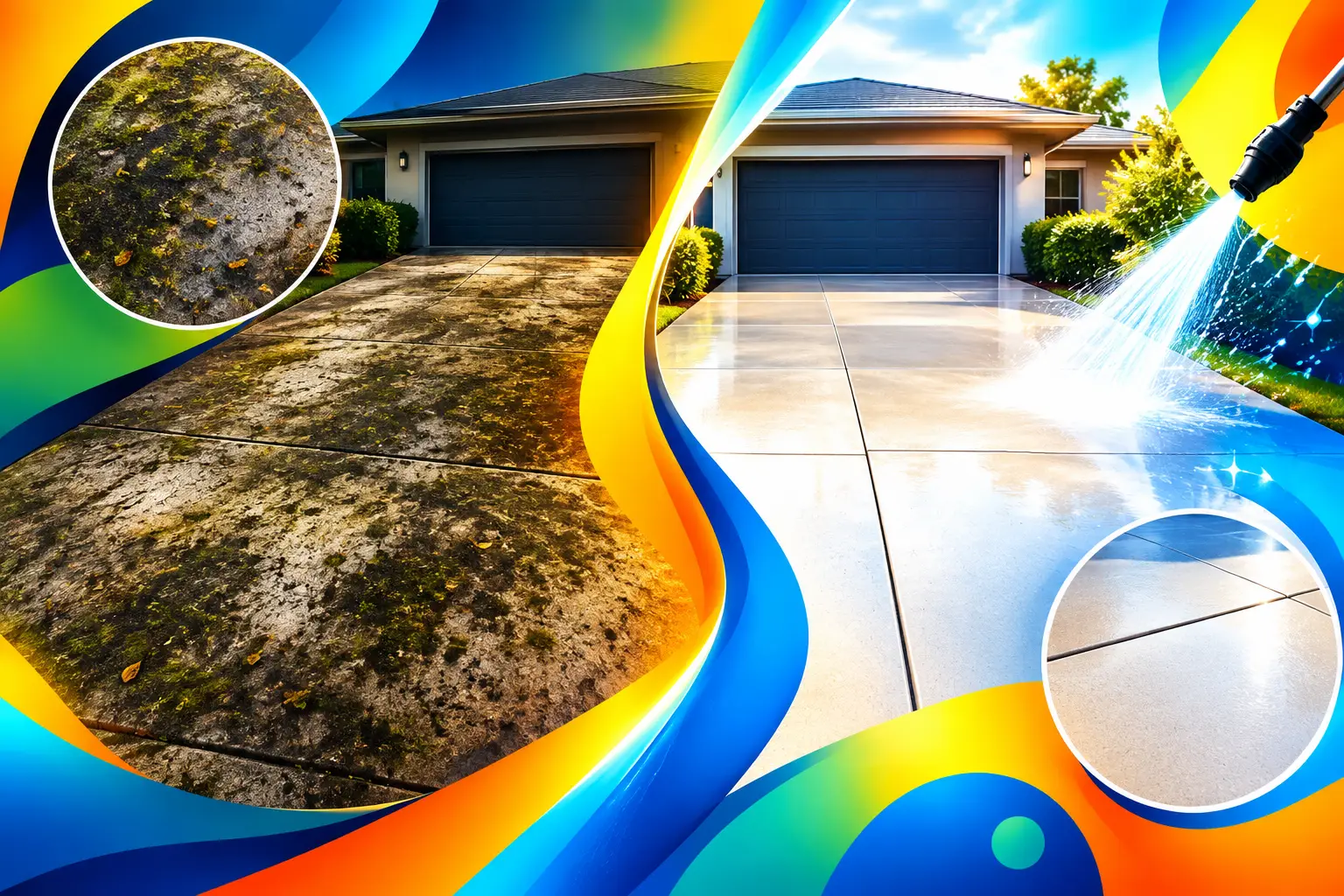
A driveway can look worn out long before it is actually worn out. That is what makes a driveway cleaning before and after example so useful: it shows the difference between surface buildup and real damage. In many cases, the concrete underneath years of dirt, algae, tire marks, and winter residue is still in solid condition.
For homeowners across Northeast Ohio, driveway cleaning is one of the quickest ways to improve curb appeal without taking on a major repair project. The results can be dramatic, but the best results come from understanding what professional cleaning can remove, what may remain, and why the right method matters.
What a Real Driveway Cleaning Before and After Example Shows
Picture a light-gray concrete driveway that has gradually turned dark and uneven in color. The center looks dull from road dust and tracked-in soil. The edges near the grass have green or black organic growth. Near the garage, several dark tire marks stand out, and a few rusty orange spots appear beneath a downspout.
Before cleaning, the driveway may seem permanently stained. After a thorough surface cleaning, the concrete often returns much closer to its original gray color. The dark film lifts, the algae disappears, and the cleaner areas reveal how much buildup had collected across the slab. Even the tire marks may fade substantially.
The contrast is usually most noticeable where one section has been cleaned and the adjacent section has not. A clean strip can look several shades brighter than the rest of the driveway. This is not paint or a coating. It is the concrete's true surface becoming visible again after the contaminants are removed.
Still, an honest before-and-after result does not mean every mark vanishes. Oil that has soaked deep into porous concrete, rust stains, fertilizer marks, and previous chemical damage may require specialized treatment. Older concrete can also have permanent color variation, cracks, spalling, or exposed aggregate that cleaning will not repair. A dependable contractor should set that expectation before the work begins, not after.
Why Driveways Get So Dirty in Northeast Ohio
Concrete is tough, but it is porous. That means it collects more than the dirt you can see. Moisture, airborne pollution, vehicle residue, organic debris, and de-icing materials can settle into the surface over time.
Northeast Ohio weather adds to the challenge. Snow, slush, salt, rain, and freeze-thaw cycles put driveways through a long season of grime. Shaded areas stay damp longer, creating favorable conditions for algae and mildew. Driveways under trees may also collect leaf tannins, pollen, sap, and soil after every storm.
The result is often a driveway that looks darker around the perimeter, near drainage areas, and along the path where vehicles enter the garage. Cleaning restores a more even appearance while removing slippery organic growth that can become a concern when the surface is wet.
What Happens During Professional Driveway Cleaning
A good driveway cleaning process is more than pointing a high-pressure wand at the concrete. The goal is to clean consistently while protecting the driveway, landscaping, garage door, and nearby surfaces.
First, the surface is evaluated. This step identifies the type of staining, the age and condition of the concrete, any areas of deterioration, and where runoff will travel. A technician should also look for loose material, existing cracks, and stains that need pretreatment.
Next, the driveway is prepared and treated as needed. Organic growth may require an appropriate cleaning solution to break it down rather than simply blasting the top layer. Oil, rust, and tire marks can call for different products and dwell times. Using the same approach for every stain is one reason some cleaning jobs produce uneven results.
The main cleaning is typically performed with a professional surface cleaner. This equipment uses rotating jets inside a housing to clean broad areas evenly. Compared with a wand alone, it helps avoid the striped or “zebra” pattern that can happen when pressure is applied inconsistently.
Edges, corners, and areas near steps or garage doors may then be detailed by hand. Finally, the surface is rinsed so loosened debris and cleaning residue are removed. The driveway will often look even better as it dries, because the remaining moisture can temporarily darken the concrete.
The Difference Between Cleaning and Damage Repair
One of the most helpful parts of reviewing before-and-after photos is knowing what you are looking at. Cleaning removes contaminants. It does not rebuild damaged concrete.
If the driveway has surface scaling from salt exposure, deep cracks, flaking, or areas where the top layer has broken away, those conditions will still be visible afterward. In fact, a cleaner surface can make existing damage easier to see. That is not a failed cleaning job. It is an honest view of the driveway's condition.
There is also a trade-off with very old or fragile concrete. More pressure is not always better. Aggressive pressure can worsen weak areas, especially around spalling or deteriorated joints. Professional service means choosing a cleaning method that delivers a meaningful improvement without treating the surface carelessly.
For newer driveways with ordinary buildup, the improvement is often striking. For older driveways with years of embedded staining and weather damage, the goal may be a cleaner, more uniform appearance rather than a perfect new-concrete finish. Both outcomes can add value and improve the way the property feels when someone pulls up.
Common Results Homeowners Can Expect
Most homeowners notice the biggest change in overall brightness and color consistency. The driveway looks cared for again, and the cleaner surface makes landscaping, siding, and entryways look sharper by comparison.
Algae, mildew, mud, road film, and ordinary grime generally respond well to a proper cleaning process. Tire marks may lift or lighten significantly, depending on how long they have been present and how deeply the rubber and oils have penetrated. Fresh oil spots are usually easier to treat than stains that have been sitting through several seasons.
Rust is more variable. A stain caused by a metal patio item, fertilizer, or a leaking vehicle component may need targeted restoration work. Likewise, paint, tar, and heavy automotive fluid stains can require extra steps beyond standard driveway washing.
The right question is not, “Will it look brand new?” A better question is, “How much of the discoloration is caused by removable buildup?” An experienced cleaning professional can help answer that question during an estimate by identifying the difference between surface contamination and permanent concrete damage.
How to Keep the After Results Looking Better Longer
After cleaning, regular care helps slow down the return of buildup. Sweep away leaves and soil before they break down into the surface. Keep downspouts directed away from the driveway when possible, since constant runoff often creates dark streaks and algae growth.
Address vehicle leaks promptly, and clean up fresh oil spills before they have time to soak in. During winter, use de-icing products carefully and follow product guidance for concrete surfaces. Repeated exposure to harsh materials can contribute to deterioration over time, especially on older slabs.
Sealing can also be worth considering for some driveways and paver areas, but it depends on the material, condition, and desired finish. A sealer is not a cure for cracks or failing concrete. When appropriate, though, it can make future cleanup easier and help limit moisture and stain absorption.
Many properties benefit from driveway cleaning every one to two years, while shaded, tree-covered, or high-traffic areas may need attention sooner. The right schedule depends on how quickly your specific surface collects grime, not on a one-size-fits-all calendar.
A Cleaner Driveway Makes the Whole Property Feel Cared For
A driveway is one of the largest visible surfaces on a home, yet it is easy to overlook until the discoloration becomes obvious. A realistic before-and-after example shows why cleaning is often a practical first step before assuming replacement is necessary.
At MC Pressure Washing, the focus is on clear expectations, careful work, and results homeowners can see. A properly cleaned driveway will not erase every crack or old stain, but it can reveal a cleaner, brighter surface that better reflects the care you put into your home. When the work is done with integrity, the difference is visible from the street and felt every time you come home.