Driveway Stain Removal Before and After Results
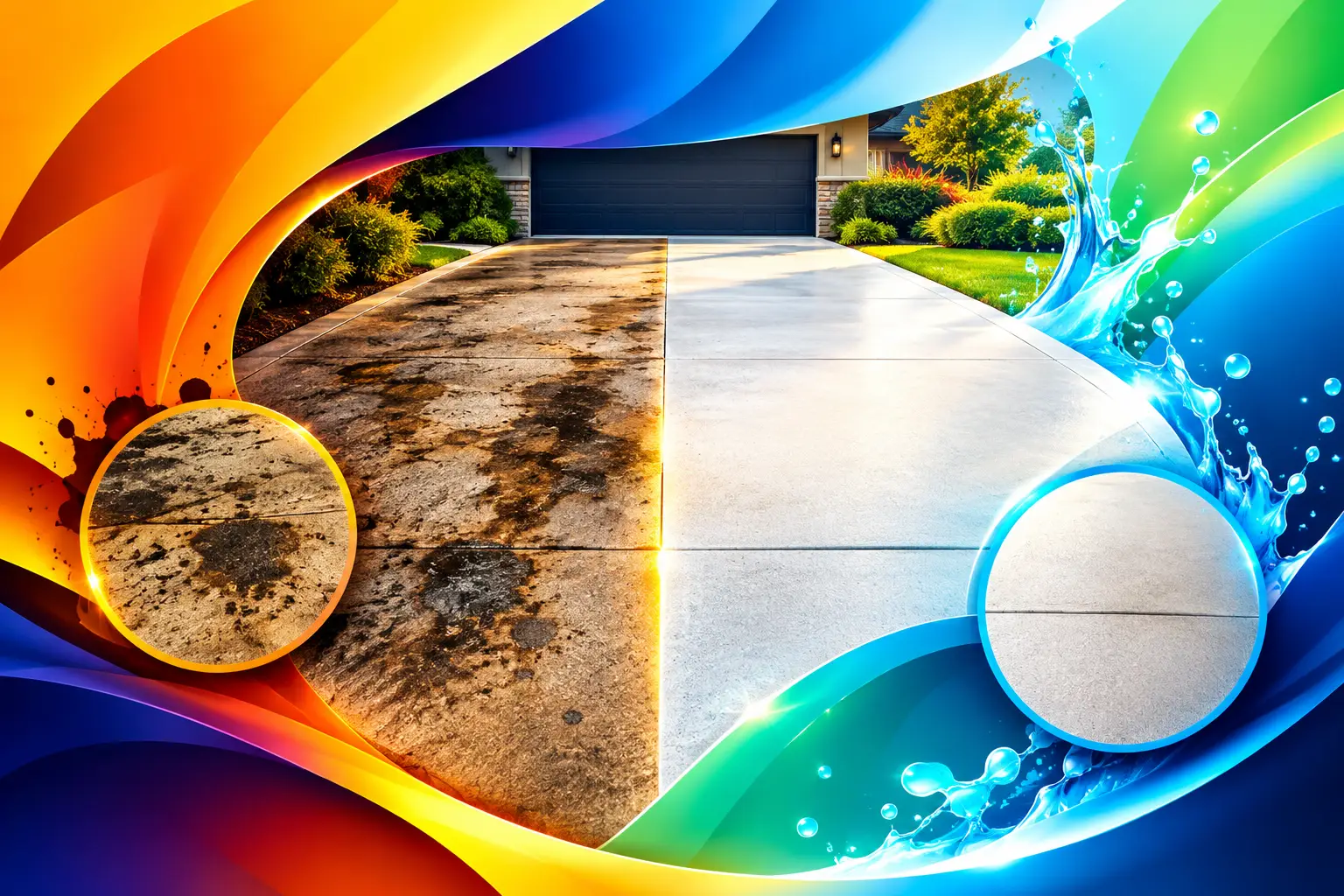
A driveway can look permanently worn out long before it actually is. Oil drips near the garage, black mildew in shaded areas, rust beneath a vehicle, and winter grime can make sound concrete look neglected. Driveway stain removal before and after photos often show a dramatic change, but the best results come from matching the cleaning method to the stain and the condition of the surface.
For Northeast Ohio homeowners, that distinction matters. Our freeze-thaw weather, road salt, rain, tree cover, and busy family schedules all leave their mark on concrete. A careful cleaning can restore a brighter, more even appearance without treating your driveway like a surface that can simply withstand anything.
What Driveway Stain Removal Before and After Can Show
The most noticeable before-and-after difference is usually color. Concrete that looked dark gray or blotchy often returns closer to its original light gray tone once embedded dirt, organic growth, and surface film are removed. Edges along the lawn, garage door, and walkways tend to look especially different because those areas collect runoff and hold moisture.
But a professional result is not just about making the driveway look lighter. It should look consistently clean across the entire surface. Cleaning only the darkest patches can leave obvious circles, stripes, or bright spots that draw attention for the wrong reason. The goal is an even finish that improves curb appeal while respecting the age and condition of the concrete.
Before-and-after results also set realistic expectations. Cleaning removes contaminants and many surface stains. It cannot repair cracks, replace missing concrete, erase deep aggregate exposure, or reverse discoloration caused by years of chemical damage. Honest service means being clear about that before work begins, not making promises a pressure washer cannot keep.
The Stains That Respond Best to Cleaning
Many common driveway stains improve substantially with the right combination of pre-treatment, pressure, water flow, and surface-cleaning equipment. The key is giving the cleaning solution time to work before rinsing rather than relying on force alone.
Dirt, Road Film, and Winter Grime
This is the buildup most homeowners do not notice until the driveway is cleaned. Road dust, salt residue, tire film, and fine soil settle into concrete pores and create a dull, uneven cast. A full-surface cleaning can make a driveway appear newer because it removes that overall layer of grime, not merely the visible spots.
In Northeast Ohio, this type of service is especially valuable after winter. Salt and dirty meltwater can collect near garage entrances and low spots, while repeated wet conditions allow grime to settle deeper into the surface.
Algae, Mildew, and Dark Organic Growth
Shaded driveways, north-facing areas, and concrete near trees often develop dark green, black, or brown organic staining. Aside from affecting appearance, growth can become slick when wet. Cleaning should include an appropriate treatment to break down the growth, followed by a controlled rinse that clears the surface without sending dirty runoff where it does not belong.
A driveway may look clean immediately after rinsing, but treatment is what helps address the source of the discoloration. This is one reason a quick rental-machine wash does not always produce lasting results.
Oil and Automotive Fluid Stains
Fresh oil stains generally respond better than stains that have sat through several seasons. Degreasers can lift a significant amount of oil from the upper pores of the concrete, and professional cleaning can greatly reduce the dark outline around a leak or spill.
Still, oil is one of the stains where expectations need to be measured. Older stains can penetrate deeply, especially on unsealed concrete. The before-and-after change may be substantial, but a faint shadow can remain. Repeated treatment, a poultice process, or future sealing may help, depending on the slab and the severity of the stain.
Rust and Fertilizer Stains
Rust can come from metal furniture, tools, leaking vehicles, irrigation, or fertilizer products containing iron. These orange stains need a rust-specific treatment. High pressure by itself rarely removes them and can damage the concrete if someone keeps increasing force in frustration.
The same care applies to fertilizer marks. Some stains are chemical reactions within the concrete rather than dirt resting on top of it. They can improve, but the result depends on how long the stain has been present and what created it.
Why More Pressure Is Not Always Better
Concrete is durable, but it is not indestructible. A powerful pressure washer held too close to the surface can etch the concrete, leaving permanent wand marks or exposing the aggregate beneath the cement paste. Those pale lines may look clean at first, but they create an uneven finish that is difficult to correct.
Experienced exterior cleaning is a balance of chemistry, water pressure, flow, and technique. Pre-treatments help loosen stains. A professional surface cleaner provides a more consistent pass across broad areas. Edge work and spot treatment address details without rushing. The equipment matters, but the person using it matters just as much.
This is also why delicate areas deserve special attention. Older concrete, decorative finishes, patched sections, pavers, and joints can require a lower-pressure approach. If there is flaking, cracking, scaling, or visible surface damage, aggressive cleaning may make an existing problem more noticeable. A reliable contractor will point that out rather than cleaning past the warning signs.
What a Professional Driveway Cleaning Process Looks Like
A good result starts with an assessment. The cleaner should identify the types of staining, check for damaged concrete, note nearby landscaping and drainage, and discuss what level of improvement is realistic. This first conversation is part of protecting your property and earning your trust.
The work area is then prepared with care. Vehicles, furniture, and loose items are moved away. Nearby plants and surfaces are protected as needed, and cleaning products are selected for the job rather than applied as a one-size-fits-all solution. Eco-conscious practices matter here, particularly around lawns, storm drains, and landscaped beds.
After stains receive the appropriate pre-treatment, the main driveway is cleaned in deliberate, overlapping passes. This approach avoids the tiger-striping that can happen when a wand is used unevenly across a large slab. Stubborn spots may receive additional treatment, and edges are cleaned so the finished driveway looks complete from the street and from the front door.
Finally, the surface is rinsed thoroughly. Wet concrete can hide some remaining discoloration, so a trustworthy provider will explain that the final dry appearance may reveal lighter residual staining, especially with old oil or rust. That transparency is part of doing the job with integrity.
How Long Will the Clean Look Last?
It depends on shade, traffic, drainage, nearby trees, and whether cars regularly leak fluids. A driveway in full sun with good drainage may stay bright for a long time. One beneath mature trees or beside a busy garage may show organic growth and tire film sooner.
For many homes, annual cleaning keeps buildup from becoming deeply embedded. Properties with heavy shade, frequent vehicle traffic, or a strong curb-appeal focus may benefit from more regular maintenance. Commercial properties often need a schedule built around customer-facing areas, pedestrian safety, and the impression a clean entrance gives visitors.
Sealing can be worth considering after the concrete has been thoroughly cleaned and allowed to dry. The right sealer may help reduce water absorption and make future spills easier to address. It is not a promise that stains will never happen, and it will not fix damaged concrete, but it can be a practical part of long-term surface care.
When It Is Time to Call a Professional
A small fresh spill can often be addressed quickly by absorbing excess oil and using a concrete-safe cleaner. But a driveway with widespread discoloration, deep fluid stains, slippery growth, rust, or years of buildup usually deserves a professional assessment. The same is true when you are preparing to sell, hosting a family event, or trying to improve the first impression of a business property.
MC Pressure Washing approaches driveway cleaning as more than a cosmetic task. It is an opportunity to care for a visible part of your property with the same accountability we would want at our own home. Clear expectations, careful methods, and dependable service make the difference.
A cleaner driveway will not change the age of the concrete, but it can change how the whole property feels when you pull in. Address stains before they settle in for another season, and give the surface the careful attention it deserves.